The restoration team included federal, state, and local partners: the U.S. Army Corps of Engineers (Buffalo District), National Park Service (Cuyahoga Valley National Park), U.S. Fish and Wildlife Service, Ohio Department of Natural Resources, Cleveland Metroparks, Northeast Ohio Regional Sewer District, Cleveland State University, and Edge Engineering & Science.
The project is reintroducing the fatmucket, a native freshwater mussel species whose scientific name is Lampsilis siliquoidea.
Native mussels act like living water filters and habitat builders. As they feed, they pull in and clean large amounts of river water, which improves water quality and helps stabilize the riverbed. Healthy mussel beds also provide food and shelter for fish and other small aquatic life, so their return strengthens the whole river ecosystem and signals that the water is clean enough to support sensitive species.
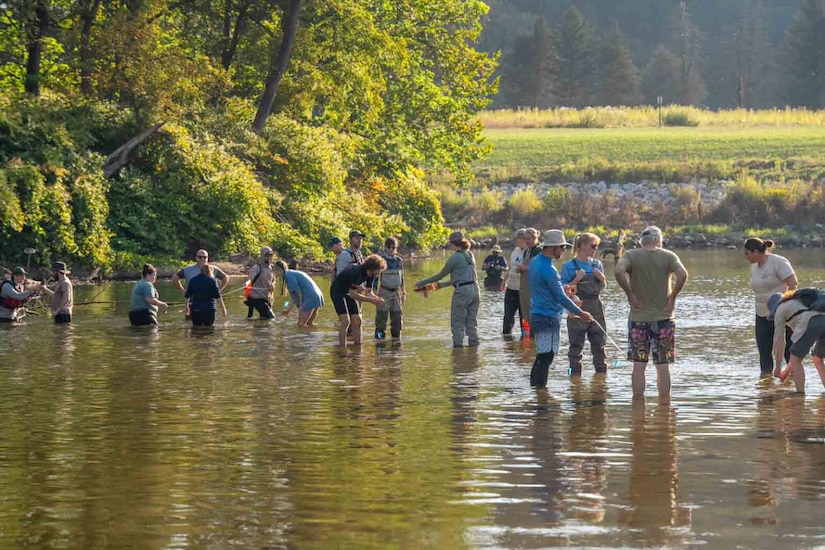
Biologists first collected broodstock (adult mussels) from healthier rivers in the region, such as the Chagrin and upper Cuyahoga, and sent them to the U.S. Fish and Wildlife Service’s Genoa National Fish Hatchery, where their young fatmuckets were propagated and raised. For this restoration, about 670 one‑year‑old fatmuckets were then brought to Cleveland State University’s lab, where scientists glued tiny numbered tags and passive integrated transponder (PIT) microchips to their shells. Finally, crews waded into selected sites in Cuyahoga Valley National Park and hand‑planted each mussel in a small divot in the riverbed, oriented with its foot down and siphon up so it could anchor and begin filtering water.
Officials will track the tagged mussels over time to see how many survive, stay in place, and grow. Each fatmucket carries a numbered shell tag and a PIT microchip, allowing researchers to relocate individuals and measure survival, movement, and growth at monitoring visits. Longer term, success will mean stable, reproducing mussel beds in the lower Cuyahoga River and continued evidence that water and habitat conditions are good enough to support them.
Yes. Moving and releasing native mussels is regulated wildlife work: Cuyahoga Valley National Park notes that the Ohio Division of Wildlife had to authorize translocating adult mussels into the Cuyahoga, showing that state permits or approvals are required. The propagation and reintroduction effort is funded in part by the National Park Foundation, which supports the National Park Service’s mussel work and Cleveland State University’s habitat and success studies; partner agencies such as USACE and the U.S. Fish and Wildlife Service contribute staff, facilities, and technical support.
This effort targets the lower Cuyahoga River within Cuyahoga Valley National Park, particularly around Peninsula, Ohio. The broader lower‑river restoration zone includes more than 20–25 miles of the Cuyahoga flowing through the park, which scientists have identified as suitable habitat for rebuilding mussel beds and where these initial ~670 mussels were strategically placed.