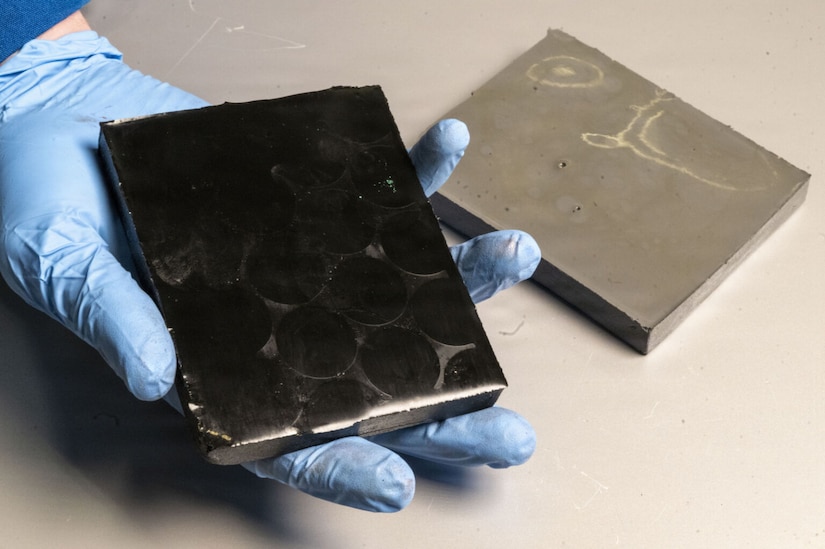
A solid-fuel ramjet (also called a solid‑fuel ramjet or solid‑fuel ducted ramjet) is an air‑breathing jet engine that uses a solid polymer or composite “fuel grain” inside a combustion duct; forward flight compresses intake air, the hot flow heats and gasifies the solid fuel at its surface, the released gaseous species mix with incoming air and burn in the combustor, and the expanding combustion products are expelled through a nozzle to produce thrust.
Key differences: a solid‑fuel ramjet is air‑breathing (uses atmospheric O2) and stores fuel as a solid grain, so it carries no onboard oxidizer and can give much greater range for a given volume; liquid‑fuel ramjets use pumped liquid propellants and allow active control of fuel flow but require plumbing and pumps; conventional rockets (solid or liquid) carry oxidizer onboard and can produce thrust from zero speed, while ramjets cannot generate thrust at rest and need initial boost.
The combustor is the ramjet’s combustion chamber where air and fuel react to produce hot gases and thrust; predicting its internal behavior is hard because SFRJ combustors operate at extreme temperatures with particle‑laden soot, rapidly changing flow structures, coupled heat/chemistry/flow feedback (solid fuel surface regression producing complex vapor species), and limited ability to place probes — so models lack experimental validation.
Primary military applications are long‑range, high‑speed air‑to‑surface and surface‑to‑surface missiles and hypersonic/near‑hypersonic weapons (air‑launched or boosted-to‑ramjet cruise) and extended‑range, high‑speed strike or interceptor vehicles; civilian uses are limited but could include high‑speed research vehicles or specialized long‑range unmanned systems — most near‑term benefits are military.
Yes. Safety: energetic additives, metal powders and hot combustion products create handling and test risks even if SFRJs avoid onboard oxidizers. Export‑control: missile propulsion and range‑extending tech fall under regimes and U.S. controls (e.g., the MTCR, ITAR/EAR). Arms‑control: longer‑range, faster, more maneuverable missiles complicate strategic stability and verification, raising policy and proliferation concerns.
NRL’s work is conducted by the Naval Research Laboratory (a Department of the Navy scientific command) and is funded/overseen by Navy/DoD research authorities; NRL explicitly lists collaboration pathways (CRADAs, FAR contracts, 10 U.S.C. 4892 agreements, licensing) and has partnered with other DoD offices and industry/allies on SFRJ efforts (e.g., THOR‑ER partners such as the Office of the Under Secretary of Defense for R&E, Naval Air Weapons Center, Norwegian research agencies and industry).