What is a "small unmanned aerial system (sUAS)" and how does it differ from larger UAS?Expand
A small unmanned aerial system (sUAS) is essentially a small drone plus its control equipment. In U.S. civilian rules, the FAA defines a “small unmanned aircraft” as one that weighs less than 55 pounds (about 25 kg) at takeoff, including everything attached to it; when that aircraft is used with its control station and data link, it is called a small UAS or sUAS. Larger UAS are heavier than 55 pounds and typically fly higher, farther, and longer, often carrying bigger sensors or weapons (for example, military systems like Predator or Reaper), while sUAS are the quadcopters and small fixed‑wing drones commonly used for photography, inspection, or hobby flying and usually operate at lower altitudes and shorter ranges.
What specific detection and mitigation tactics were discussed at the symposium?Expand
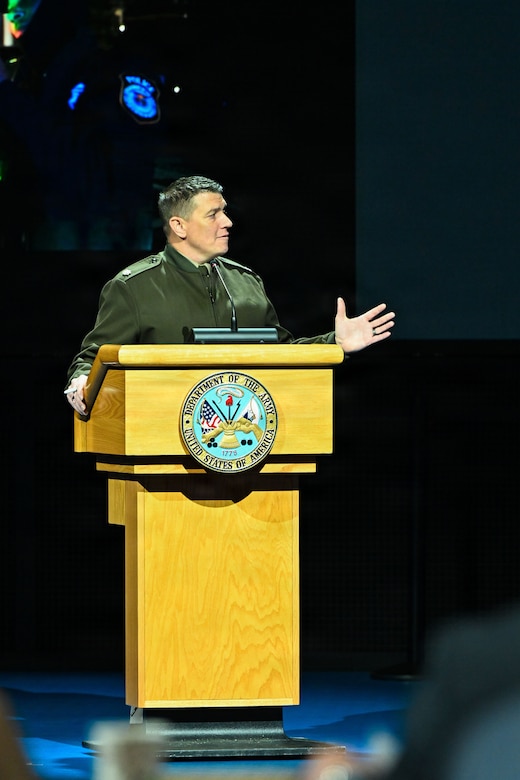
Public reporting on the symposium is high‑level and does not list specific named tactics or tools. According to the Army and Air Force summaries, the event focused on:
Sharing “lessons learned” from a recent counter‑sUAS threat‑simulation exercise at Fort McNair.
Improving threat detection and mitigation “best practices” through better real‑time information‑sharing among federal, state, and local entities.
Establishing clear command‑and‑control structures for incidents and optimizing resource‑sharing and procurement across the National Capital Region and 2026 FIFA World Cup host cities.
No open sources tied to this symposium detail particular sensors (like radar or RF detectors) or effectors (like jammers or interceptors); those specifics were not disclosed in the articles.
Which interagency and law enforcement organizations participated in the meeting?Expand
The articles describe participants mostly in broad categories, with a few specific organizations named. Identified participants were:
Joint Task Force–National Capital Region / U.S. Army Military District of Washington (JTF‑NCR/MDW), which hosted the symposium.
Joint Interagency Task Force 401 (JIATF 401).
Leaders from the Department of the Army/War Department.
Civilian law‑enforcement agencies (not individually named) from the National Capital Region.
Representatives from 2026 FIFA World Cup U.S. host cities.
The White House Task Force on the FIFA World Cup 2026 (its executive director Andrew Giuliani is mentioned by name).
The published accounts do not provide a full list of every agency or law‑enforcement department that attended.
Are there legal, privacy, or airspace restrictions on deploying counter-UAS measures in civilian areas?Expand
Yes. In the United States there are significant legal, privacy, and airspace constraints on counter‑UAS in civilian areas:
Airspace control: The FAA has exclusive authority over U.S. airspace. Most non‑federal entities (including local police) may not unilaterally shoot down, jam, or seize control of drones; doing so can violate aviation safety rules and federal criminal laws.
Communications and GPS jamming: Deliberately interfering with radio communications or GPS signals generally violates Federal Communications Commission (FCC) regulations and federal law, unless a specific statute grants an agency that authority.
Limited federal carve‑outs: Congress has granted certain federal agencies (e.g., DoD, DHS, DOJ, Department of Energy) narrow authority to detect and, if necessary, disrupt or destroy drones in defined circumstances (such as protecting specific facilities or high‑risk events). These authorities are detailed in defense authorization acts and the Preventing Emerging Threats Act of 2018.
Privacy and civil liberties: Counter‑UAS systems that monitor or track drones can also capture information about people and property on the ground. DHS and DOJ guidance stresses that such activities must comply with the Constitution (especially the Fourth Amendment), privacy statutes, and agency civil‑liberties policies, including limits on data collection, retention, and sharing.
Overall, extensive legal review and interagency coordination are usually required before deploying counter‑UAS capabilities over civilian populations.
Will the symposium lead to new policies, shared protocols, or funding for counter-UAS capabilities?Expand
The available reporting on this specific symposium does not say that it directly created new policies, shared protocols, or funding lines. It describes the event as a quarterly Department of the Army/Interagency Law Enforcement Symposium aimed at:
Building a shared understanding of c‑sUAS threats, capabilities, and limitations.
Sharing lessons from recent exercises.
Improving interagency coordination, resource‑sharing, and procurement planning for the National Capital Region and 2026 FIFA World Cup host cities.
Any formal policy changes, standardized protocols, or new funding would likely emerge later through separate Defense Department or congressional processes; those outcomes are not documented in the public articles about this meeting.
How will these counter-UAS efforts affect civilian drone operators and public events?Expand
The articles do not spell out direct impacts on everyday civilian drone operators, but some likely effects can be inferred from current practice:
Stricter protection around major events: For high‑profile gatherings such as 2026 FIFA World Cup matches or National Capital Region ceremonies, authorities may establish temporary flight restrictions (TFRs) and “no‑drone zones” and deploy counter‑UAS systems. Recreational and commercial pilots could face tighter limits or temporary bans near these venues.
More coordinated enforcement: By improving information‑sharing and command‑and‑control, agencies aim to detect and respond more quickly to unauthorized drones. That can mean faster identification of pilots violating FAA rules or flying in restricted airspace.
Continued allowance for lawful flying: The symposium’s focus on best practices and interagency coordination does not change the basic framework for legal sUAS use under FAA Part 107 and recreational rules; compliant operators away from protected events or sensitive sites should see little day‑to‑day change.
Specific new restrictions or procedures for public events would depend on future FAA notices and agency decisions, which are not detailed in the symposium coverage.
What technologies are commonly used for counter-UAS (e.g., sensors, jamming, kinetic interceptors) and were any highlighted?Expand
Commonly used counter‑UAS technologies fall into two broad categories—detection and mitigation—and several types are widely documented, though the symposium articles do not name specific systems:
Detection sensors:
• Radar tuned for small, low‑flying drones.
• Passive radio‑frequency (RF) sensors that listen for drone control and video links.
• Electro‑optical/infrared (EO/IR) cameras for visual and thermal tracking.
• Acoustic sensors that recognize drone noise signatures.
• Sensor‑fusion software that combines data from multiple sources.
Mitigation/effectors:
• Electronic warfare tools such as RF jammers or GPS jammers/spoofers to disrupt control links or navigation (where legally authorized).
• Protocol “takeover” systems that send commands to seize control of certain commercial drones.
• Kinetic options such as interceptor drones, guided rockets, or small missiles, and, in some cases, high‑powered microwave or laser systems to damage or disable drones.
Open‑source U.S. government material (for example, DHS’s C‑UAS Technology Guide and DoD’s counter‑sUAS strategy and demonstrations) highlights these same families of sensors and effectors as the main technological building blocks for counter‑drone systems. The symposium write‑ups emphasize tactics and coordination, not specific branded technologies.