Important News

U.S. and regional partners open air defense coordination cell at Al Udeid Air Base in Qatar

Interesting: 0/0 • Support: 0/0Log in to vote

Key takeaways

Follow Up Questions

What is "integrated air and missile defense" and how does it work?Expand

“Integrated air and missile defense” (IAMD) is a way of tying together many different air‑ and missile‑defense tools—radars and other sensors, command‑and‑control computers, and weapons like fighter jets and interceptor missiles—so they work as a single, layered system instead of as separate pieces.

How it works in simple terms:

  • Sensors (ground‑based radars, airborne sensors, satellites, ships) constantly scan for aircraft, drones, rockets, cruise missiles, and ballistic missiles.
  • Their data is fused into a shared, real‑time picture at command centers, which identify and track threats and decide which country or unit should respond.
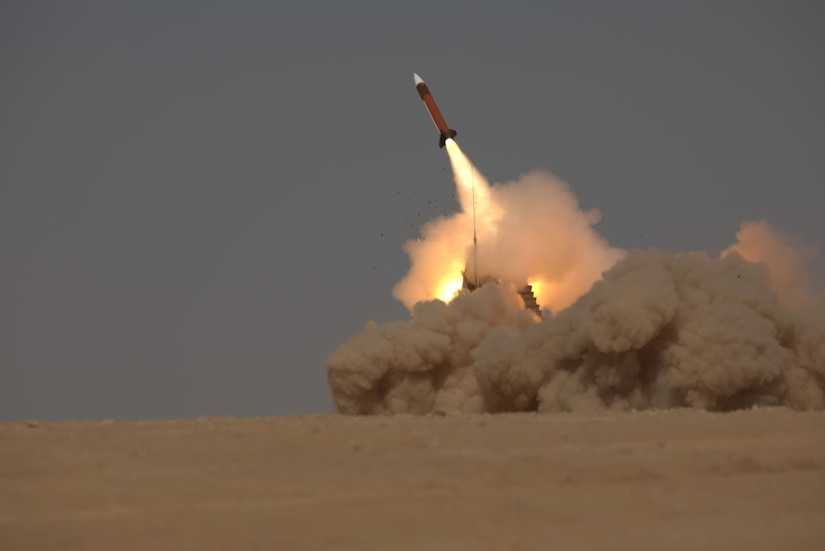
  • Interceptor systems (Patriot, THAAD, Aegis ships, fighter aircraft, etc.) are then cued to engage the incoming targets in sequence and from different ranges so there are overlapping “layers” of defense.
  • Because everything is networked, different nations and services can share early‑warning data and avoid gaps or duplicate engagements.

U.S. joint doctrine defines IAMD as integrating capabilities and overlapping operations to defend the homeland and U.S. interests and protect forces by denying an adversary effective use of air and missile threats. The new Qatar cell is meant to improve that kind of integrated, shared picture and response across multiple countries in the region.

Where is Al Udeid Air Base and why is it strategically important?Expand

Al Udeid Air Base is in Qatar, in the desert southwest of the capital, Doha. It is strategically important because:

  • It is the largest U.S.-used air base in the Middle East and hosts the Combined Air Operations Center (CAOC), which commands and controls most U.S. and coalition air operations across the Middle East region.
  • It serves as a major hub for U.S. Air Forces Central (AFCENT), U.S. Special Operations, and coalition partners, supporting operations in Iraq, Syria, Afghanistan (previously), and broader counterterrorism and deterrence missions.
  • Its location near the Persian Gulf and key sea lanes allows rapid reach into the Gulf, Levant, and Central/South Asia, making it a central platform for deterring Iran and supporting allies.
Which "regional partners" participated in establishing the cell?Expand

Public reporting and the official CENTCOM release describe the new cell as being staffed by the United States and unspecified “regional partners,” but they do not clearly list which countries are participating. Media coverage says it involves Gulf states operating within the existing 17‑nation Combined Air Operations Center at Al Udeid, but does not provide an authoritative, publicly confirmed roster of partner countries for this specific cell.

What responsibilities does U.S. Central Command (CENTCOM) have in the region?Expand

U.S. Central Command (CENTCOM) is the U.S. military’s geographic command responsible for a large region stretching from Northeast Africa, across the Middle East, to Central and South Asia. Its core responsibilities in this region include:

  • Planning and conducting U.S. military operations (air, land, maritime, cyber, and special operations) within its area of responsibility.
  • Deterring and, if necessary, defeating state adversaries and non‑state armed groups, including counterterrorism and crisis‑response missions.
  • Working with regional militaries through training, exercises, and security cooperation to build partner capacity and coordinate coalition operations.
  • Protecting U.S. forces, citizens, and interests, and helping keep key sea lanes, air routes, and energy infrastructure open.
How will the new coordination cell change how air and missile defense is coordinated day to day?Expand

The new coordination cell (the Middle Eastern Air Defense – Combined Defense Operations Cell, or MEAD‑CDOC) changes day‑to‑day air and missile defense by creating a permanent, shared workspace inside the existing Combined Air Operations Center where U.S. and regional officers sit together to:

  • Plan multinational air and missile defense exercises and drills on a routine basis.
  • Share sensor data, threat warnings, and technical expertise in near real time, building a common regional air picture.
  • Coordinate who will track and, if needed, engage specific threats so that nations’ systems work in a layered, complementary way rather than in isolation.

CENTCOM and Air Forces Central describe it as a way to improve how regional forces coordinate and share air and missile defense responsibilities across the Middle East on a continuous, everyday basis, not just during crises.

Does establishing the cell signal a change in U.S. military posture or force levels in the region?Expand

Available information indicates this cell is mainly an organizational and coordination change, not a formal announcement of new U.S. combat units or major force increases.

CENTCOM’s release frames MEAD‑CDOC as a new coordination cell inside the existing CAOC at Al Udeid, staffed by U.S. and regional personnel already operating there, and does not announce additional troop deployments or new weapon systems. Defense analysts quoted in independent reporting describe it as a long‑planned step toward better regional integration and deterrence, rather than a signal of imminent U.S. offensive action or a large shift in force levels—though it does reflect an ongoing U.S. focus on missile and drone threats from actors like Iran.
Comments

Only logged-in users can comment.
Loading…